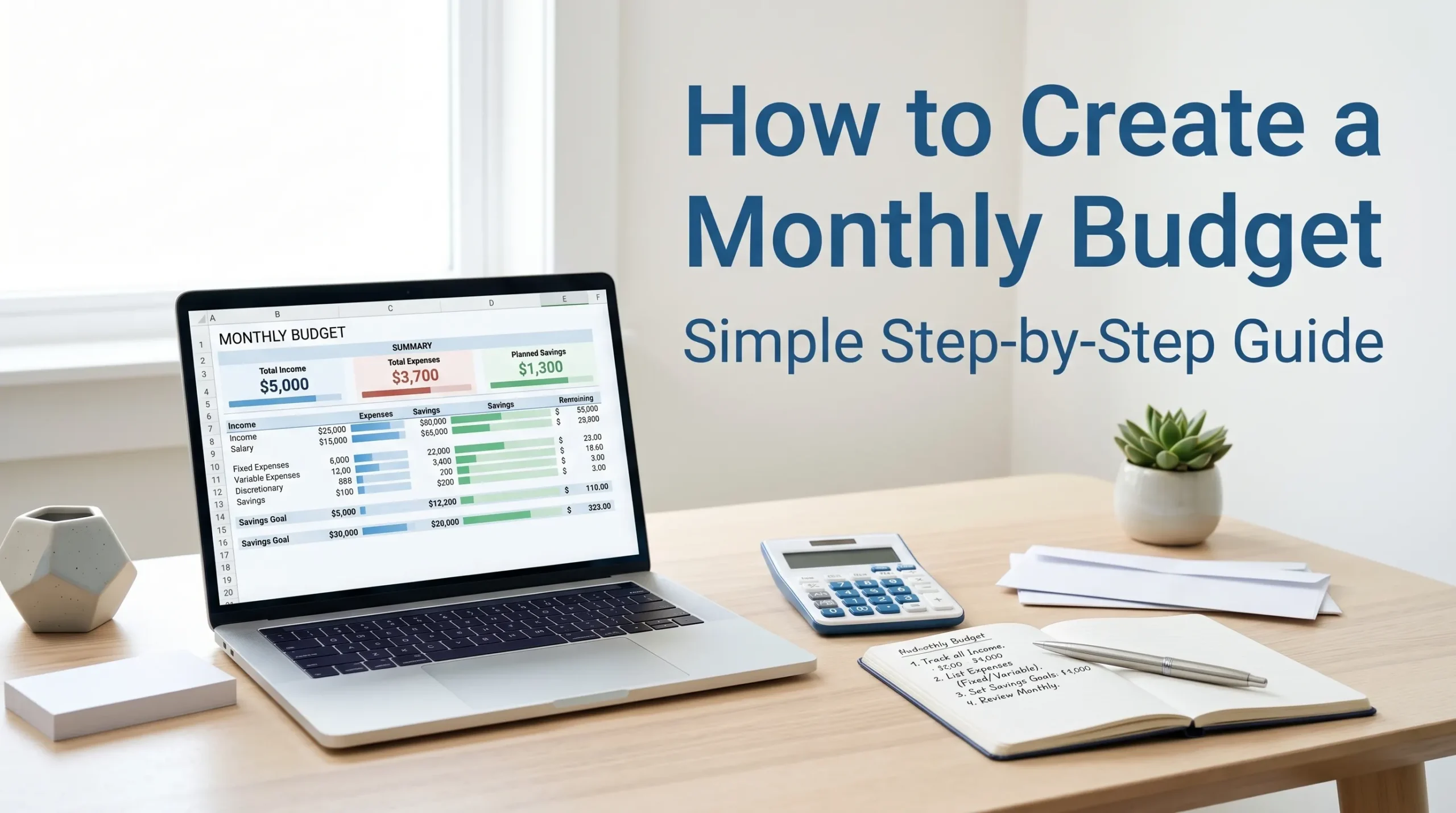
How to Create a Monthly Budget: A Simple Step-by-Step Guide
Most people don’t lose control of their money in one big moment. It happens slowly — a subscription here, a takeout order there, a “small” purchase that adds up faster than expected. By the time the bank balance looks low, it’s hard to remember where the money actually went.
Table of Contents
How to Create a Monthly Budget: A Simple Step-by-Step Guide
Most people don’t lose control of their money in one big moment. It happens slowly — a subscription here, a takeout order there, a “small” purchase that adds up faster than expected. By the time the bank balance looks low, it’s hard to remember where the money actually went.
Ready to Create Your Monthly Budget?
Make budgeting easier with our free monthly budget calculator. Enter your income and expenses to see how much money you have left and organize your monthly spending.
Try the Free Budget Calculator → No signup required • Free to useLearning how to create a monthly budget is one of the simplest ways to fix that. A budget isn’t about restriction or deprivation. It’s a plan that shows you exactly how much money comes in, where it goes, and how much you can realistically save. Once you can see the full picture, spending decisions get a lot easier.
This guide walks through the process step by step, using plain language and realistic examples, so you can build a monthly budget that actually fits your life.
What Is a Monthly Budget?
A monthly budget is simply a plan for your money over a 30-day period. It lists how much income you expect to receive, and how that income will be divided between expenses, savings, and everything in between.
Think of it as a map rather than a set of rules. It doesn’t tell you that you’re not “allowed” to spend money on things you enjoy. Instead, it helps you decide, in advance, how much you can spend in each area without running into trouble before your next paycheck.
A good monthly budget answers three basic questions:
- How much money is coming in?
- How much money is going out, and where?
- How much is left over — and what should happen to it?
Why Create a Monthly Budget?
Budgeting has a reputation for being tedious, but the benefits are practical and immediate. A monthly budget helps you:
- Understand your income and expenses. Many people are surprised by how much they actually spend once they write it down.
- Control unnecessary spending. Seeing categories on paper (or on screen) makes it easier to notice where money is quietly leaking out.
- Plan your savings. Instead of saving “whatever is left,” you decide on a savings amount up front.
- Prepare for upcoming expenses. Annual insurance payments, car maintenance, or holiday spending are easier to handle when you’ve planned for them.
- Make financial decisions with more clarity. A budget won’t make decisions for you, but it gives you the information needed to make better ones.
Ready to organize your finances?
Explore all our free money tools in one place.
Explore Free Tools →None of this requires complicated spreadsheets or financial expertise. It just requires a bit of honesty about your numbers and a willingness to review them regularly.
How to Create a Monthly Budget Step by Step
Here’s a straightforward process you can follow, whether you’re budgeting for the first time or resetting a budget that hasn’t been working.
1. Calculate Your Monthly Income
Start with the money you can reliably count on each month. For most people, this means take-home pay after taxes and deductions — not gross salary.
If you have a fixed salary, this step is simple: use your regular monthly take-home amount.
If your income varies — for example, if you’re paid hourly, work freelance, or rely on commission — it helps to look back at the past three to six months and calculate an average. To stay on the safe side, some people prefer to budget based on their lowest earning month rather than their average, treating any extra income as a bonus toward savings or upcoming expenses.
Want a More Detailed Way to Track Your Finances?
If you want to go beyond a simple monthly budget, explore this Finance Tracker Spreadsheet to organize your income, expenses, spending, and financial goals in one place.
View the Finance Tracker Spreadsheet →2. List Your Fixed Monthly Expenses
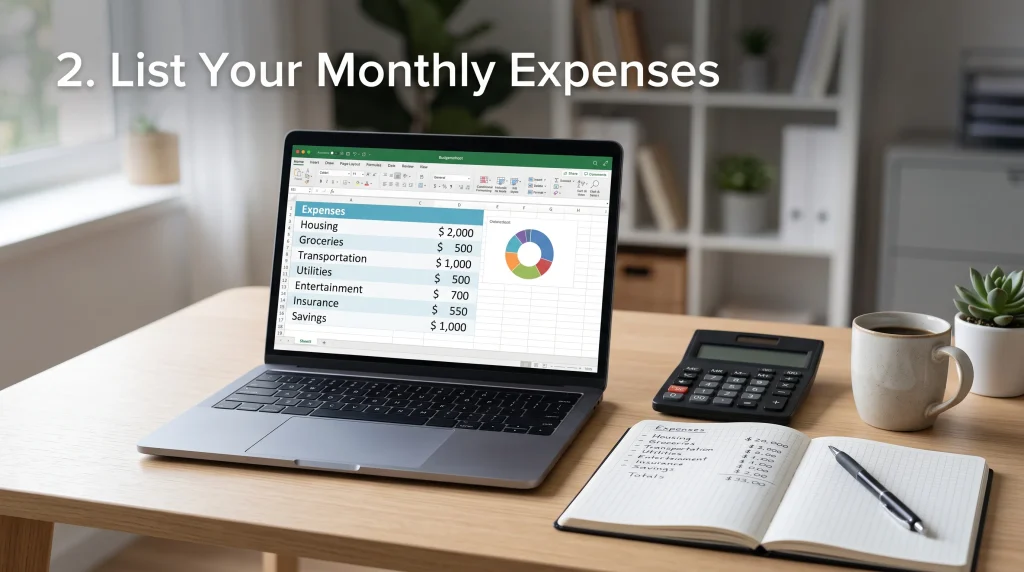
Fixed expenses are the costs that stay roughly the same each month and are usually due on a set date. Common examples include:
- Rent or mortgage payments
- Utilities (electricity, water, gas)
- Phone and internet bills
- Insurance premiums
- Loan or credit card minimum payments
- Subscriptions (streaming services, gym memberships, software)
Go through your bank statements from the last month or two to make sure nothing is missed. Small recurring subscriptions are especially easy to forget.
3. Estimate Your Variable Expenses
Variable expenses change from month to month, which makes them a little trickier to plan for. Typical categories include:
- Groceries
- Transportation and fuel
- Dining out
- Entertainment
- Personal care and shopping
- Miscellaneous or “just in case” spending
Since these amounts shift, it’s usually more accurate to look at what you’ve spent in these categories over the past two or three months and use that as your starting estimate, rather than guessing.
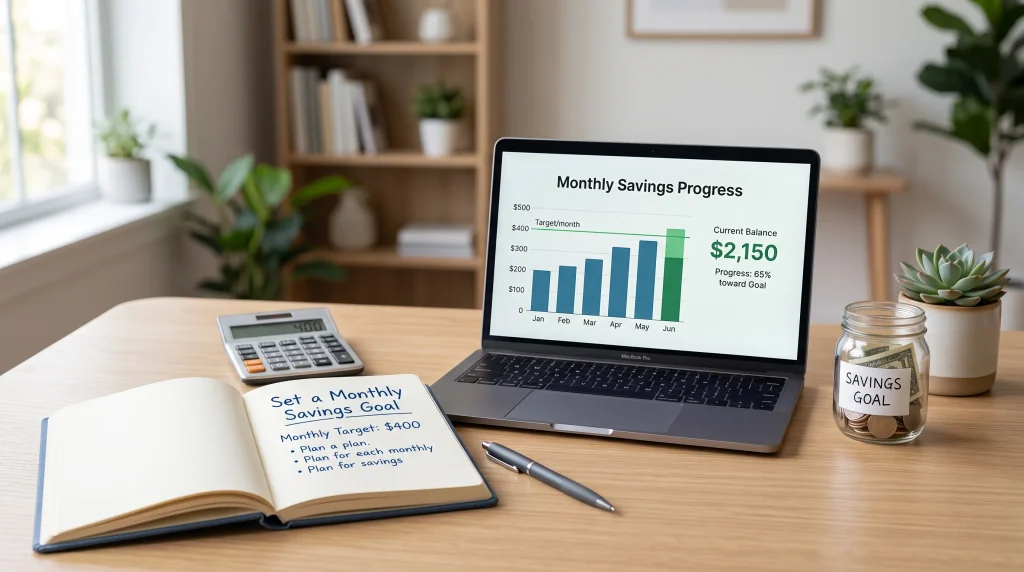
4. Set a Monthly Savings Goal
It’s tempting to treat savings as whatever happens to be left at the end of the month — but for most people, that means very little actually gets saved.
A more effective approach is to treat savings like any other required expense. Decide on an amount (even a modest one) and include it in the budget from the start, rather than waiting to see what remains.
The right amount depends entirely on your income, expenses, and personal goals, so there’s no single number that works for everyone. Starting with a small, consistent amount is generally more sustainable than an ambitious target that’s hard to maintain.
Have a Savings Goal in Mind?
Once you know how much you can save each month, use our free Savings Goal Calculator to estimate how much you may need to save and how long it could take to reach your goal.
Try the Free Savings Goal Calculator →5. Calculate How Much Money You Have Left
Once income, fixed expenses, variable expenses, and savings are listed, the math is simple:
Monthly income − monthly expenses = money remaining
Ideally, this number is at or above zero. If there’s money left over after expenses and savings, you can decide whether to add it to savings, use it for debt repayment, or set it aside for a future goal.
If the result is negative — meaning expenses are higher than income — that’s a clear signal that something in the budget needs to change. This is common, especially when building a first budget, and it’s not a reason to give up. It simply means the next step (adjusting the budget) is necessary before the plan will work.
6. Adjust Your Budget
If your expenses are higher than your income, or if you simply want more breathing room, look for realistic adjustments rather than drastic ones. For example:
- Review subscriptions and cancel ones you rarely use.
- Compare providers for insurance, phone, or internet plans.
- Plan meals in advance to reduce food waste and last-minute takeout.
- Set a specific weekly amount for discretionary spending instead of an open-ended limit.
- Delay non-essential purchases by a few days to avoid impulse buying.
Small, sustainable changes are usually easier to stick with than sudden, extreme cutbacks — and they’re less likely to cause you to abandon the budget entirely after a few weeks.
Simple Monthly Budget Example
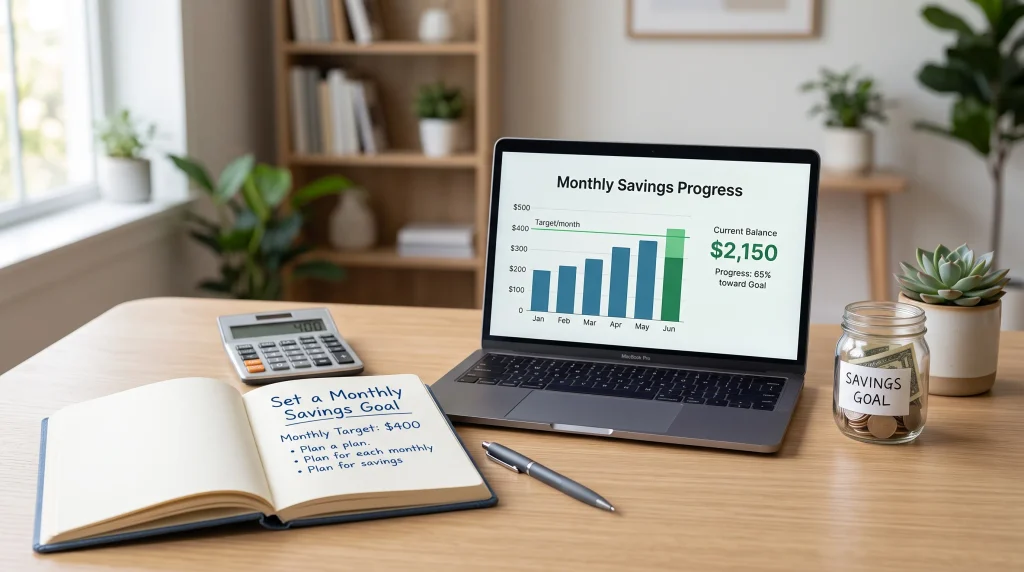
Here’s a hypothetical example to show how these steps come together. The numbers below are for illustration only — your own income and expenses will look different.
Monthly income: $3,200
Fixed expenses:
- Rent: $1,100
- Utilities: $150
- Phone and internet: $80
- Insurance: $120
- Subscriptions: $40
Fixed expenses total: $1,490
Variable expenses:
- Groceries: $400
- Transportation: $150
- Dining out: $120
- Entertainment: $80
- Personal/miscellaneous: $150
Variable expenses total: $900
Savings goal: $300
Total planned spending and savings: $1,490 + $900 + $300 = $2,690
Money remaining: $3,200 − $2,690 = $510
In this example, there’s $510 left over, which could go toward extra savings, debt payments, or a specific upcoming expense. Again, this is just one possible scenario — your own monthly budget should reflect your actual income and priorities.
The 50/30/20 Budget Rule
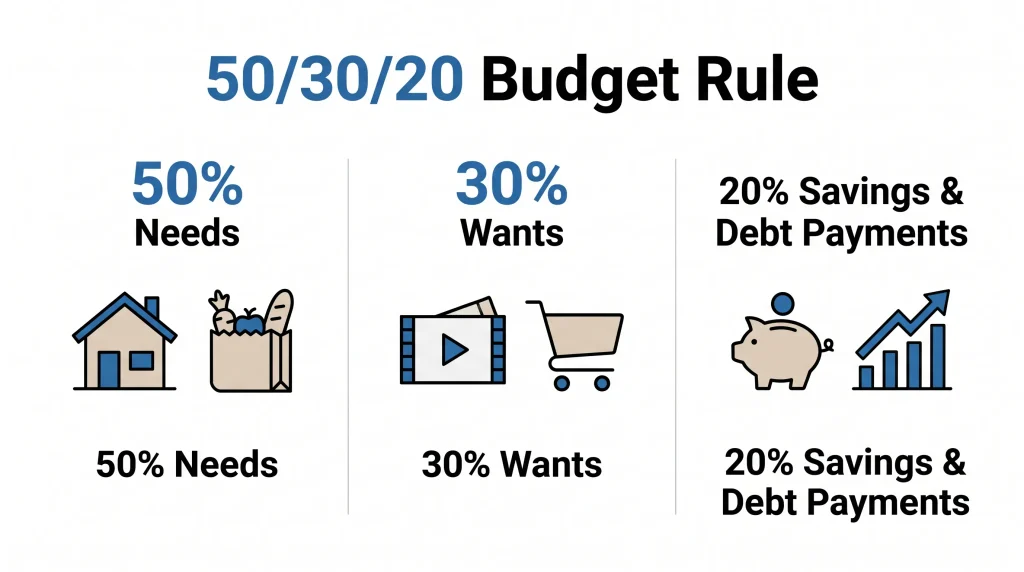
If you’re not sure how to divide your income into categories, the 50/30/20 rule is a commonly used starting framework. It suggests allocating your after-tax income roughly as follows:
- 50% for needs — housing, utilities, groceries, transportation, insurance, and minimum debt payments.
- 30% for wants — dining out, entertainment, hobbies, and non-essential shopping.
- 20% for savings and debt repayment — building an emergency fund, saving toward goals, or paying down debt beyond the minimum.
This isn’t a strict rule that fits every situation. Someone with high housing costs or significant debt may need to adjust the percentages. It’s best used as a general reference point rather than a target you must hit exactly every month.
Use a Free Monthly Budget Calculator
Doing this math by hand works fine, but it can take time, especially if you like to test different scenarios. A free monthly budget calculator can make the process faster by organizing your income and expenses in one place and automatically showing how much money may remain after planned spending.
This is particularly useful if your income or expenses change from month to month, since you can quickly update the numbers and see the effect without redoing all the calculations manually. If you’d like to try it, the free monthly budget calculator is a simple way to get started without building a spreadsheet from scratch.
Common Monthly Budgeting Mistakes
Many budgets fail not because the idea is flawed, but because of a few avoidable mistakes:
- Forgetting irregular expenses. Annual fees, car maintenance, and holiday spending are easy to overlook if you’re only thinking month to month.
- Underestimating everyday spending. Small daily purchases — coffee, snacks, delivery fees — often add up to more than people expect.
- Setting unrealistic limits. Extremely tight budgets are hard to maintain and often lead to giving up entirely.
- Not reviewing the budget regularly. Income and expenses change over time; a budget that isn’t updated eventually stops reflecting reality.
- Ignoring savings. Treating savings as optional, rather than a fixed part of the budget, usually means it doesn’t happen consistently.
- Giving up after one difficult month. A single month of overspending doesn’t mean the budget failed — it’s a normal part of adjusting to a new system.
How to Stick to Your Monthly Budget
Creating a budget is one thing; maintaining it is another. These habits can make it easier to stay consistent:
- Review your budget weekly, not just monthly. A quick weekly check-in makes it easier to catch overspending early.
- Keep it simple. A budget with a handful of clear categories is easier to maintain than one with dozens of narrow subcategories.
- Track your actual spending. Comparing what you planned to spend with what you actually spent helps you refine future budgets.
- Build in some flexibility. A small buffer for unplanned expenses reduces the chances of the whole budget falling apart over one surprise cost.
- Revisit your budget when circumstances change. A new job, a move, or a change in expenses is a good reason to update your numbers.
Consistency matters more than perfection. A budget you actually follow most months is far more useful than a perfect budget you abandon after two weeks.
Explore Our Free Money Tools
Looking for simple ways to manage your money? Explore our free budgeting, savings, emergency fund, and expense tracking tools in one place.
Explore All Free Tools →Frequently Asked Questions
How do I create a monthly budget?
Start by calculating your monthly income, then list your fixed and variable expenses, set a savings goal, and subtract your total expenses and savings from your income to see what’s left. Adjust as needed if expenses are higher than income.
What should be included in a monthly budget?
A monthly budget should include your total income, fixed expenses (like rent and utilities), variable expenses (like groceries and entertainment), and a planned savings amount.
How much should I save each month?
There’s no fixed amount that applies to everyone. It depends on your income, expenses, and financial goals. Many people start with a modest, consistent amount and increase it over time as their budget allows.
What is the 50/30/20 budget rule?
It’s a general guideline suggesting that 50% of income goes toward needs, 30% toward wants, and 20% toward savings and debt repayment. It’s a starting framework, not a strict requirement.
How can I budget if my income changes every month?
Look at your income over the past few months and calculate an average, or budget based on your lowest-earning month to stay cautious. Update your budget as actual income comes in.
How can a monthly budget calculator help?
A budget calculator can organize your income and expenses automatically and show how much money may be left after planned spending, which saves time compared to manual calculations.
What should I do if my expenses are higher than my income?
Review your variable expenses first, since they’re usually easier to adjust than fixed costs. Look for non-essential spending that can be reduced, and consider whether any fixed expenses (like subscriptions) can be lowered or removed.
Conclusion
Creating a monthly budget doesn’t require financial expertise — just a clear look at your income, your expenses, and your goals. Start by calculating what you earn, listing what you spend, setting a savings amount, and adjusting where needed. From there, the process becomes a habit of reviewing and refining rather than starting from scratch each month.
You don’t need a perfect budget on the first try. A simple, realistic plan that you actually follow will do far more for your finances than an elaborate one you abandon after a few weeks.