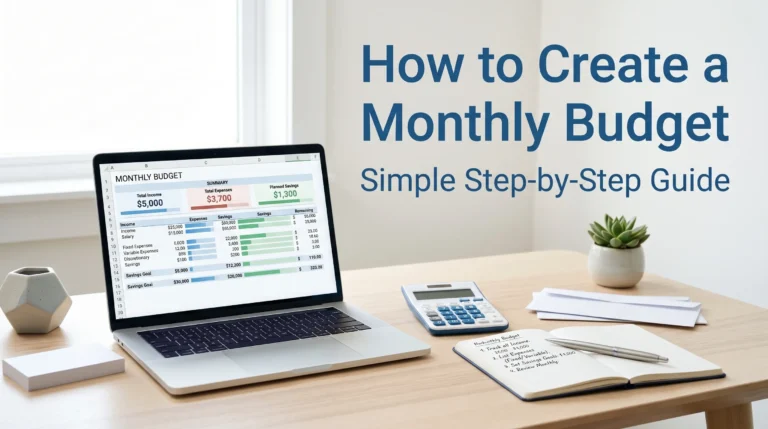
Financial Planning Tips: A Practical Guide to Managing Your Money
Looking for financial planning tips that actually work in real life, not just in theory? You don’t need a finance degree or a six-figure salary to plan your money well — you just need a system you can stick with. The right financial planning tips can help you control everyday spending, grow your savings, manage debt, and steadily move toward the goals that matter to you, no matter what your paycheck looks like.
This guide breaks down clear, usable financial planning tips you can put into action today, this week, and this month — no vague motivational fluff, just steps that work.
Table of Contents
What Is Financial Planning?
Financial planning is the process of organizing your money so it supports the life you actually want. Most solid financial planning tips revolve around a handful of core building blocks:
- Income — what you earn
- Expenses — what you spend
- Budgeting — how you divide money between needs, wants, and savings
- Savings and an emergency fund — money set aside for goals and surprises
- Debt — loans, credit cards, and how you’re handling them
- Financial goals — short-term and long-term targets
- Retirement savings — money set aside for your future self
- Protection against unexpected expenses — insurance and financial cushions
You don’t have to tackle every piece at once. Financial planning is an ongoing process, and it can start with something as small as writing down what comes in and what goes out each month.
Savings Goal Calculator
Find out how much you need to save each month, week, or day to reach your savings goal.
Calculate Your Savings Goal → Free • Easy to use • No complicated setupWhy Financial Planning Matters
Following practical financial planning tips doesn’t guarantee a specific result, but it does give you something valuable: clarity about your own money. Here’s what a basic plan can realistically help with:
- Knowing where your money goes, instead of guessing
- Lowering financial stress by replacing uncertainty with a plan
- Getting ready for unplanned expenses, like car repairs or medical bills
- Growing your savings consistently instead of relying on leftovers
- Steering clear of unnecessary debt by spending within your means
- Making measurable progress toward financial goals
- Building stronger long-term money habits that add up over time
None of this happens overnight. A financial plan isn’t a promise of instant wealth — it’s a tool that makes good money decisions easier to repeat, month after month.

10 Practical Financial Planning Tips
These ten financial planning tips cover the fundamentals that apply whether you’re just getting started or fine-tuning a plan you already have.
1. Know Your Monthly Income
Before you can budget, you need an accurate number to work from. If you’re salaried, your gross income is your pay before taxes and deductions, while your take-home pay (net income) is what actually lands in your bank account. Since your bills get paid with take-home pay, that’s the figure your budget should be built around.
If your income changes from month to month — commissions, tips, freelance work — try budgeting off your average income from the last few months, or your lowest realistic month, so you’re not caught short.
2. Track Your Spending
Before adjusting anything, you need an honest picture of where your money currently goes. Most people are surprised by how much slips into categories like food delivery, streaming subscriptions, and small daily purchases.
For a couple of weeks, log every expense — large or small — in a notebook, spreadsheet, or app. A free expense tracking tool can simplify this by sorting your spending into categories automatically, so patterns become obvious instead of buried in old receipts.
Free Expense Tracking
Track your daily spending, organize your expenses, and get a clearer picture of where your money goes.
Start Tracking Expenses → Free • Simple • Easy to use3. Create a Realistic Monthly Budget
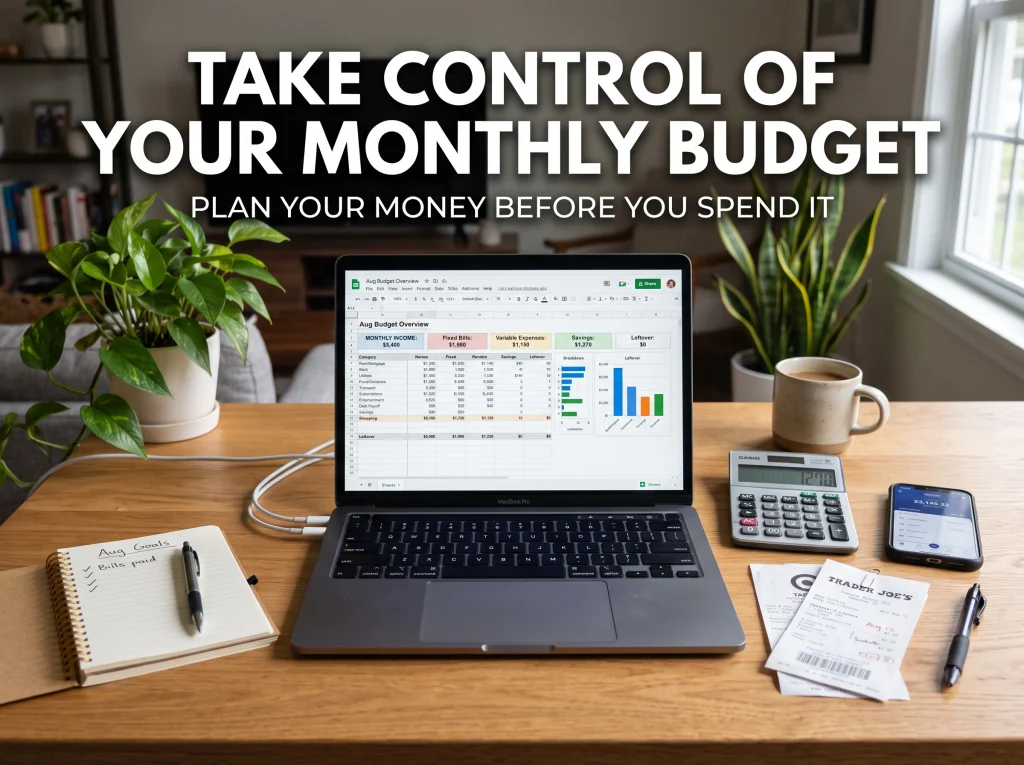
Once you know your income and your real spending habits, you can build a monthly budget that reflects your actual life rather than a guess. A workable budget usually groups money into:
- Essential expenses — housing, utilities, groceries, transportation, insurance
- Debt payments — minimum payments plus any extra you can add
- Savings — emergency fund contributions and goal-based savings
- Discretionary spending — entertainment, dining out, hobbies
There’s no single budgeting structure that fits everyone, and the right setup often depends on how stable your income is and what you’re working toward. A free monthly budget calculator can help you sketch out a reasonable spending plan using your real numbers instead of starting from a blank page.
4. Set Specific Financial Goals
A goal like “save more” is hard to plan around because it has no finish line. A goal like “save $1,000 for a car repair fund within five months” gives you a target and a timeline to build toward.
A few examples of clearly defined goals:
- Building $1,000 in emergency savings over the next six months
- Paying off a $2,500 credit card balance within a year
- Setting aside $5,000 toward a home down payment
- Growing a $1,500 travel fund before a planned trip
- Bumping up retirement contributions by 1% this year
A savings goal calculator can turn a bigger goal into a realistic monthly savings amount, so it feels achievable rather than out of reach.
5. Build an Emergency Fund
An emergency fund is money set aside specifically to absorb life’s unplanned costs — a job loss, a medical bill, an urgent repair — so you’re not forced to reach for high-interest credit when something goes wrong. The Consumer Financial Protection Bureau points out that even modest emergency savings can help households absorb financial shocks and bounce back more quickly.
Emergency fund targets aren’t one-size-fits-all. A few common starting points:
- A small initial cushion, such as $500 to $1,000
- Enough to cover one full month of essential expenses
- A longer-term target of three to six months of expenses, depending on job stability and household circumstances
Even setting aside $25–$50 automatically from each paycheck can build real savings over time. An emergency fund calculator can help you set a target based on your own expenses and comfort level.
6. Understand Your Paycheck
Plenty of people build a budget off the wrong number simply because their paycheck is confusing. A typical paycheck breaks down into:
- Gross pay — total earnings before anything is taken out
- Taxes — federal, state, and local, where applicable
- Deductions — health insurance, retirement contributions, other benefits
- Take-home pay — what actually reaches your account
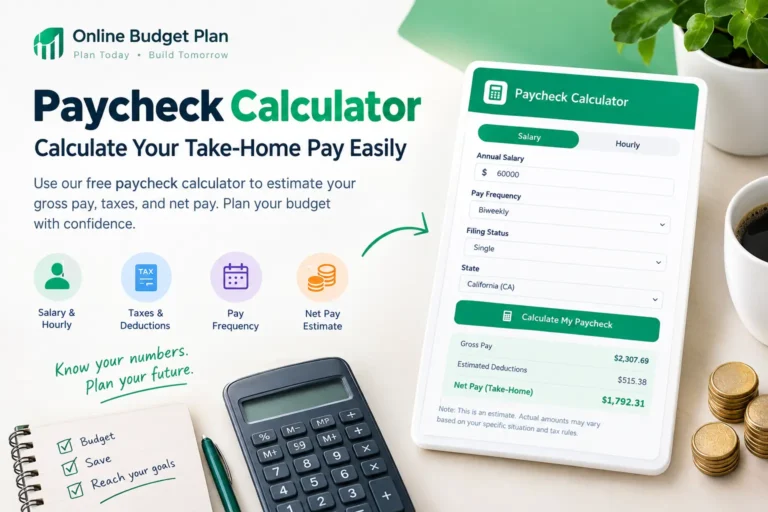
Understanding these line items helps you budget accurately and catch payroll mistakes early. A paycheck calculator can estimate your take-home pay after typical deductions, which is especially handy when comparing job offers or evaluating a raise.
Paycheck Calculator
Estimate your paycheck and better understand your take-home pay, deductions, and income.
Calculate My Paycheck → Free • Quick estimate • Easy to use7. Review and Manage Debt
Not all debt behaves the same way, and managing it starts with understanding exactly what you owe. When reviewing your debt:
- Check the interest rate on every balance — high-interest debt, like most credit cards, costs more the longer it sticks around
- Keep minimum payments on your radar so nothing gets missed
- Hold off on new debt while you’re paying down existing balances, where possible
- Decide how to prioritize payoff in a way that fits your situation — some people tackle the highest interest rate first, others prefer clearing the smallest balance first for momentum
There’s no universal right answer here, and the best approach depends on your interest rates, balances, and personal preferences. What matters most is keeping debt payments inside your monthly budget instead of competing with it.
8. Automate Important Financial Habits
Automation takes the guesswork — and the willpower — out of staying consistent. Consider automating:
- A transfer into savings right after payday
- Bill payments for fixed expenses, to sidestep late fees
- Retirement contributions through payroll deductions
- Recurring transfers toward specific savings goals
Automation won’t replace checking in on your finances, but it does make good habits stick without constant effort.
9. Protect Yourself From Financial Surprises
Beyond an emergency fund, a handful of habits can soften the blow of financial surprises:
- Carry appropriate insurance coverage — health, auto, renters, or homeowners — for your situation
- Keep financial documents organized and secure, from insurance policies to tax records
- Periodically review subscriptions; small recurring charges add up quietly
- Plan ahead for irregular annual costs, like vehicle registration or holiday spending, so they don’t hit like an emergency
10. Review Your Financial Plan Regularly
A financial plan isn’t something you set once and forget. Revisit it whenever:
- Your income changes — a raise, a new job, fewer hours
- Your expenses change — new rent, a growing family, a move
- Your debt situation shifts
- Your financial goals evolve
A simple monthly or quarterly check-in, comparing your budget to what actually happened, keeps your plan grounded in reality instead of going stale.
Financial Planning Tips for Beginners
If you’re starting completely from scratch, these beginner-focused financial planning tips lay out a clear order of operations:
- Calculate take-home income — know exactly what lands in your account each month.
- Track expenses — for two to four weeks, record everything you spend.
- Separate needs from wants — sort out what’s essential versus optional.
- Create a realistic monthly budget — grounded in real numbers, not assumptions.
- Start an emergency fund — even $20–$50 per paycheck is a real start.
- Set one or two financial goals — specific, with a dollar amount and deadline.
- Review the plan every month — adjust as you learn what works.
These financial planning tips for beginners work in this order because you can’t budget accurately without knowing your real spending, and you can’t set realistic goals without a working budget behind them.
Monthly Budget Calculator
Create a simple monthly spending plan, organize your expenses, and see how much you may have available for saving.
Create My Monthly Budget → Free • Simple budgeting • No signup requiredFinancial Planning Tips for Salaried Employees
A regular paycheck makes planning more predictable, but it comes with its own set of considerations. These financial planning tips for salaried employees are worth building into your routine:
- Budget around take-home pay, not gross salary, since that’s the number that actually funds your life
- Automate savings right after payday, before discretionary spending has a chance to eat into it
- Understand your payroll deductions, including retirement contributions and benefits costs
- Make full use of employer benefits, such as retirement matching, HSAs, or FSAs where offered
- Plan ahead for annual expenses like insurance renewals or property taxes that don’t come out of every paycheck
- Keep building emergency savings, even while juggling regular bills
- Watch out for lifestyle inflation — the habit of spending more every time income rises
- Direct part of any raise toward savings, not just spending — for example, splitting a raise between savings and discretionary use
What Is the Best Way to Budget Money?
There isn’t one universal answer to the best way to budget money — the right method depends on your income, your goals, and how much structure you personally need to stay on track. A few common approaches:
| Method | How It Works | Best For |
|---|---|---|
| Zero-based budgeting | Every dollar of income gets assigned a job — spending, saving, or debt — until the total hits zero | People who want maximum detail and control |
| Percentage-based budgeting (e.g., 50/30/20) | Income is divided into broad buckets like needs, wants, and savings/debt | People who prefer simplicity over granular tracking |
| Pay-yourself-first | Savings are set aside automatically before any other spending occurs | People focused on savings goals or debt payoff |
| Simple category budgeting | Spending is grouped into a few broad categories with loose limits | Beginners who want an easy way to start |
Each approach comes with trade-offs — zero-based budgeting offers precision but takes more upkeep, while percentage-based budgeting is quicker but less detailed. The most effective method is usually whichever one you’ll actually keep up with and check regularly, not necessarily the most popular one online.
Personal Finance Advice That Actually Helps
Some personal finance advice holds up no matter your income level or life stage:
- Spend less than you earn whenever possible
- Know exactly where your money goes each month
- Save automatically instead of depending on willpower
- Prepare for unexpected expenses before they show up
- Steer clear of unnecessary high-cost debt, especially revolving credit card balances
- Set specific financial goals with real amounts and deadlines
- Check your progress on a regular schedule
- Adjust your plan whenever your circumstances shift
This kind of advice about personal finance works because it leans on repeatable habits rather than one-time fixes — which is really what good financial planning tips are built on.
Common Financial Planning Mistakes to Avoid

Even a well-intentioned plan can fall apart because of a few recurring mistakes:
- Building a budget before tracking any actual spending
- Setting savings targets that don’t match your current income
- Overlooking irregular expenses, like annual fees or holiday costs
- Forgetting about subscriptions and recurring charges that quietly add up
- Leaning on credit cards as a stand-in for an emergency fund
- Never revisiting or updating the budget after creating it
- Spending more every time income goes up, with no plan for the extra money
- Setting goals with no specific amount or deadline attached
- Focusing only on short-term spending while long-term goals, like retirement savings, get ignored
A Practical Example: Budgeting on a $4,000 Take-Home Income
This example is illustrative only and is not a universal recommended allocation — your own budget should reflect your cost of living, obligations, and goals.
Picture a salaried employee who takes home $4,000 a month. After tracking spending for a few weeks with a free expense tracking tool, they might sort their budget into something like this:
| Category | Example Monthly Amount |
|---|---|
| Housing | $1,200 |
| Utilities | $200 |
| Food | $500 |
| Transportation | $350 |
| Debt payments | $300 |
| Savings | $300 |
| Emergency fund | $150 |
| Discretionary spending | $1,000 |
After running this breakdown through a free monthly budget calculator, this person might notice their discretionary spending is higher than they’d like, and choose to shift $150 of it toward their emergency fund and debt payments instead. That’s the real value of tracking and budgeting — not a perfect formula, but a clearer picture that makes better decisions possible.
Free Expense Tracking
Track your daily spending, organize your expenses, and get a clearer picture of where your money goes.
Start Tracking Expenses → Free • Simple • Easy to useFinancial Planning Checklist
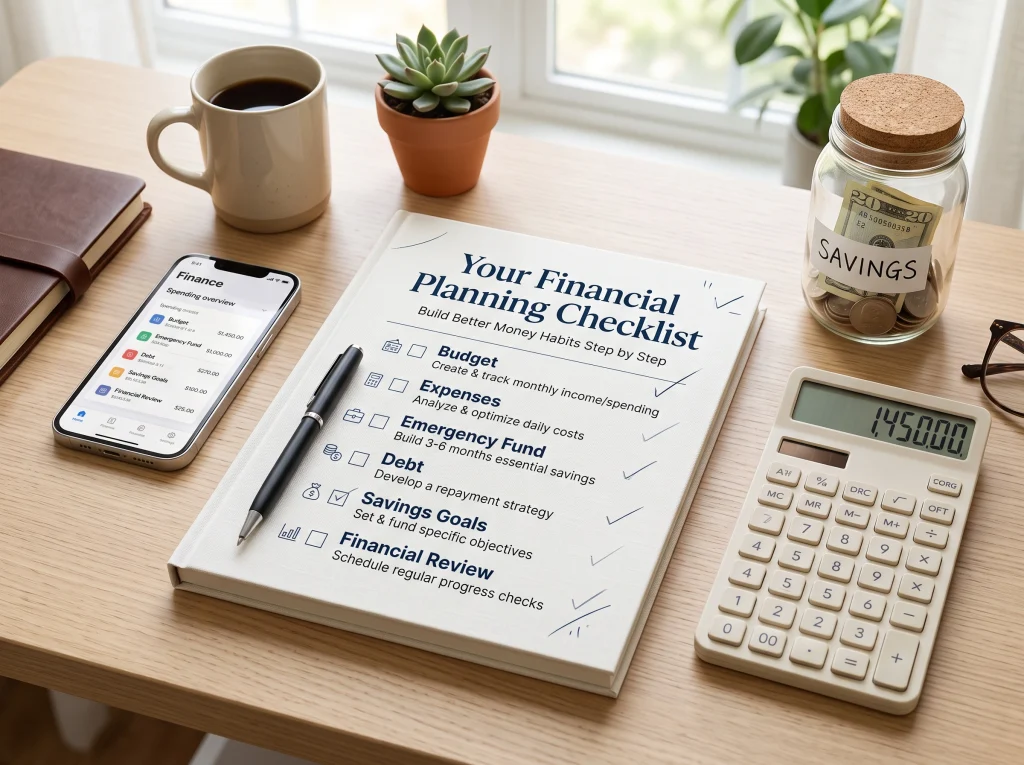
Save or screenshot this checklist to track your progress:
- ☐ Calculate monthly take-home income
- ☐ Track monthly spending for at least two weeks
- ☐ List all recurring bills and subscriptions
- ☐ Create a realistic monthly budget
- ☐ Set at least one specific savings goal
- ☐ Start, or add to, an emergency fund
- ☐ Review current debt and interest rates
- ☐ Automate savings and bill payments where possible
- ☐ Review subscriptions and recurring expenses
- ☐ Review the full financial plan at least once a month
Frequently Asked Questions
What are the most important financial planning tips? Track your actual spending, build a budget around take-home income, start an emergency fund, set specific goals, and revisit your plan on a regular schedule. These fundamentals hold up at any income level.
How do I start financial planning as a beginner? Begin by calculating your take-home income and tracking your spending for a few weeks. From there, build a simple budget, start a small emergency fund, and set one or two specific, measurable goals.
What is the best way to budget money? No single method works for everyone. Zero-based budgeting, percentage-based budgeting, and pay-yourself-first are all effective — the best one is whichever you’ll actually keep using month after month.
How much should I save each month? It depends on your income, expenses, and goals. Many people aim for a set share of take-home pay, such as 10–20%, but even smaller, consistent contributions build up meaningfully over time.
Why is an emergency fund important? An emergency fund helps you cover unplanned costs, like medical bills or car repairs, without turning to high-interest debt. The Consumer Financial Protection Bureau highlights emergency savings as a key part of financial resilience.
How can salaried employees manage their money better? Budget around take-home pay, automate savings right after payday, take full advantage of employer benefits, and avoid ramping up spending every time income rises.
How often should I review my financial plan? A monthly or quarterly review works well for most people, or any time your income, expenses, or goals shift in a meaningful way.
How can I track my monthly expenses? You can track manually with a spreadsheet or notebook, or use a dedicated expense tracking tool that automatically sorts spending into categories so patterns are easier to spot.
What should I include in a personal financial plan? A basic plan typically covers income, a monthly budget, an emergency fund, a debt management approach, and specific short- and long-term financial goals.
How can I set realistic financial goals? Attach a specific dollar amount and a deadline to each goal — something like “save $1,000 in six months” — rather than a vague aim like “save more.”
A Final Note
Good financial planning isn’t about getting everything perfect — it’s about building habits you can actually keep up: knowing your numbers, budgeting realistically, saving consistently, and adjusting as life changes. Put these financial planning tips to work as a starting point, and you can shape a plan that genuinely fits your income and your goals, one step at a time.
This article is for general educational and informational purposes only and does not constitute individualized financial advice. For decisions involving complex personal circumstances, consider consulting a qualified financial professional.
Your Simple Guide to Financial Planning Tips
- Consumer Financial Protection Bureau — consumerfinance.gov
- U.S. Securities and Exchange Commission, Investor.gov — investor.gov
- Federal Trade Commission, Consumer Advice — consumer.ftc.gov
- FDIC — fdic.gov
- IRS — irs.gov